Showing posts with label EU. Show all posts

Friday, April 25, 2014

S&P Downgrades Russian Sovereigns

Standard & Poor’s cut the Russian Federation sovereign debt credit rating citing the capital flight and risk to investment in the wake of the Ukraine crisis. S&P lowered Russia’s sovereign debt rating from BBB to BBB- placing it one notch above junk status.

Russia’s economy has slowed in step with the rest of the BRICs (Brazil, Russia, India, China). As the global economy entered recession in 2008, the BRICs were one of the few remaining bright spots still generating economic growth. For a variety of reasons tied to specific national and global macro conditions all BRICs economic growth has slowed considerably.

Russia’s fortune was closely tied to energy exports. The devaluation of the US dollar and acute political risk heightened by wars in Afghanistan, Iraq and Syria; and the uncertainty surrounding the impact of events in Libya, Egypt and Iran had supported a rich valuation of oil prices.


New sources of fossil fuels coming online in North America, Libya, Iraq and Iran has undermined oil prices. Political instability in Venezuela and the fracturing of Russia’s paternalistic relationship with Ukraine and the potential disintermediation of Russian oil exports to its largest market in the EC adds a new uncertainty to global energy markets. It may also serve to support the rich valuation for oil even as supply expands.

In its commentary, S&P notes the rising debt burdens of Russian Federations Local and Regional Governments, slowing domestic growth, over dependency on energy exports and the developing conflict with Ukraine as reasons for the downgrade.

Turning business cycles create powerful macroeconomic risk factors that challenge SMEs. Rapidly changing market dynamics surface grave threats to SMEs. The Ukrainian Crisis is a risk event that impacts the cost of capital for the global SME community, spikes increase in commodity prices and disrupts global supply chains and market access. Acute macro risk drivers force market players to compete for capital in realigning markets. How will this global risk event impact your business? SME's must continually assess market events to seize emerging market opportunities.
Get Risk Aware
Get risk aware with MERA, a Macroeconomic Risk and Event Assessment app available on Google Play. MERA's Mobile Office capabilities provides business managers a world class risk management tool to assess emerging risk factors to adapt and capitalize on the opportunities shifting markets present.

risk: Russian Federation, EU, Ukraine, commodities, oil, Standard & Poor's, sovereign debt, credit risk, sme lending, market dynamics, macroeconomic risk

Monday, April 14, 2014

SMEs Dance to the Basel III Shuffle

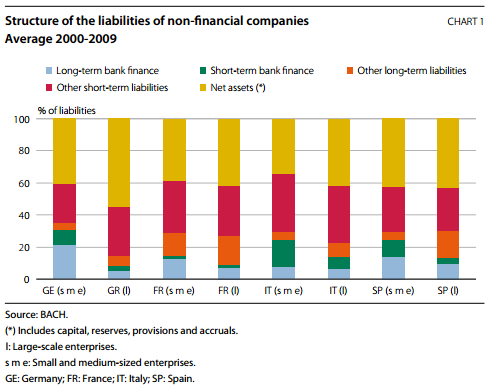
cap structure sme eu.PNG
I often wonder, what if Basel II capital accords had been in place prior to the Great Recession? 

Could the devastating crisis fueled by the serial pops of credit bubbles rumbling through the dismal landscape of G20 principalities been avoided with better capital adequacy safeguards? 

Could the precious Post Cold War dividend been preserved; had the fiduciaries of global solvency not toppled the dominoes of economic prosperity and political stability through extreme selfishness and irrational behavior?

Some economists assert that had the guidelines of Basel II been in place it would not have mattered. That may certainly be true, but one is still left to wonder if Systemically Important Financial Institutions (SIFI) had followed better governance frameworks the fissures emanating from the epicenter of the global economic meltdown would not have been as deep or as widespread.

The lessons learned from the crisis are being codified in the new governance frameworks of Basel III. Whereas previous Basel Accords focused on capital adequacy and loss reserves aligned to risk weighted assets and counterparty exposures, Basel III looks to strengthen capital adequacy by addressing liquidity and leverage risk in the banks capital structure. Basel III recognizes the primacy of mitigating the systemic risk concentrated in the capital structure of a SIFI and lesser designees, and the contagion threat it poses on its counterparties and the greater economy. 

To ally solvency concerns, Basel III installs a leverage ratio and bolsters its Liquidity Coverage Ratio (LCR) which will require all banking institutions to increase its regulatory capital reserves of High Quality Liquid Assets (HQLA). An increase in HQLA reserves will raise the cost of capital for all financial institutions requiring it to raise its spreads on credit products. 

SMEs will be particularly affected by Basel III initiatives. SME’s are highly dependant on bank capital and credit products and remain highly sensitive to the cyclicality of macroeconomic factors. D&B’s Small Business Health Index reports that SME business failures in the US were in excess of 140,000 per month in 2013. The OECD reported that during 2012 over 800,000 EC SME’s closed shop in 2012. 

Eurofact reported that 60% of all non-financial value add to the EC economy is attributable to SMEs. Though SMEs are generally recognized as principal economic drivers in both the developed and lesser developed economies; during the economic crisis SME’s were rationed out of the credit markets. Large capital infusions and accommodative monetary policy by the central bank authorities principally sought to bolster bank capital and inject liquidity into the faltering global banking system. 

As such much of the low cost capital provided to banks did not trickle down to SMEs. Better returns were realized by deploying capital to investment partnerships, energy resource development, the acquisition of strategic commercial enterprises and underwriting speculative trading in the global security markets. 

Little of the low cost capital found its way onto Main Street; driving the bifurcating wedge between the real and speculative economy. As a more conservative political landscape emerges from the wreckage of the economic calamity created by “elitist” financial institutions and “remote” Brussels based government bureaucrats, the cause of the SME is resonating in the rising voice of a middle class spoken with a distinct nationalist accent. 

Politicians, legislators and advocacy groups are fully invested in the cause of the SME. Stakeholders are advocating more government involvement to underwrite and guarantee sponsored loans. In an era where government involvement in markets is under severe attack, political expediency and prudent economics coalesce to fund the incubation of SMEs. Even if greater government intervention is counterintuitive to laissez faire proclivities of the politically engaged, higher taxes would be required to fund the risk of capital formation initiatives. The securitization of SME loans is also a consideration; but aversion to leverage and the risk to encourage poor lending practices raise fears of creating yet another credit bubble.

The Government of Singapore recently rose its guarantee on SME loans to cover 70% of principal in response to the increase in cost of capital banks will charge as a result of Basel III. Spreads on SME loans are estimated to increase between 50 to 80 basis points. This rise in the cost of capital will allow banks to recoup Basel III compliance expenses associated with the segregation of regulatory capital requirements to service SME loan portfolios.

The risk premia on SME loans is justified by regulators because it guarantees the availability of credit through the business cycle. The financial health of SME’s are highly correlated to the vicissitudes of the business cycle. During times of cyclical downturns risk factors for SMEs are magnified due to the prevalence of concentration risk in products, regions, markets, client and critical macroeconomic factors germane to the SME’s business. Mitigation initiatives are inhibited due to liquidity constraints, resource depletion and balance sheet limitations. The closure of credit channels exacerbates this problem and Basel III risk premia pledges to fund SMEs through a trying business cycle.

To maintain profitability of SME lending, banks will enhance quality standards and haircut collateral margins; a potentially onerous demand since asset valuations remain severely distressed from the effects of the Great Recession. Banks will avoid SMEs with enhanced risk profiles, make greater use of loan covenants, expand fee based services and hike origination fees to protect margins and instill enhanced credit risk controls to minimize default risk.

As the strictures of Basel III take root within commercial banks alternative credit channels are opening to better match an SME’s credit requirements and market situation with a financial product that best addresses their business condition. D&B has initiated a timely capital formation initiative for SMEs. Access to Capital - Money to Main Street is an event tour that is bringing together regional providers of funding for SMEs and startups. 

The economic recovery is combining with technology to energize innovations in SME funding options. Crowd-funding, micro-lending, asset financing, leasing, community bank loans, credit unions and venture capital channels are a few of the many options available for small business funding. Each channel offers distinct terms and advantages that match a funding option to the specific situation of an SME. 

SME associations and advocacy groups are surfacing in the EU that seek to harness the residual capital created by SME failures. Second Chance and Fail2Suceed are initiatives that seek to harness the intellectual capital garnered by entrepreneurs in unsuccessful enterprises. It is a clear recognition that a great failure can be the mother of greater wisdom. This may augur well for the success of Basel III as it seeks to build on the shortfalls of its forebears to better protect the global banking system as it promotes the wealth of nations by equitably funding the growth of the global SME segment.

Sum2 offers a portfolio of risk assessment applications and consultative services to businesses, governments and non-profit organizations. Our leading product Credit Redi offers SMEs tools to manage financial health and improve corporate credit rating to manage enterprise risk and attract capital to fund initiatives to achieve business goals. Credit Redi helps SMEs improve credit standing to demonstrate creditworthiness to bankers and investors. On Google Play: Get Credit|Redi


Risk: SME, Basel III, commercial lending, political stability, economic growth, USA, EU, alternative credit channels, credit risk, global banking, business failure, OECD, SIFI

This article was originally released on DaftBlogger.  

Thursday, April 3, 2014

ADP Job Report: Recovery Marches On

Private-sector employment increased by 191,000 during the month of March, according to the latest ADP National Employment Report (NER) released yesterday. The NER suggests a steady, albeit uneven growth of nonfarm private employment since net job creation first turned positive during the first quarter of 2010. The pattern of rising employment gains, confirms signs of an accelerated economic recovery reinforced by a March report that is above the 12 month average. 

Though the report is an indicator of continued recovery, job growth forecasts for the month were closer to 205,000. As fears of a jobless recovery recede, the US economy has a long way to go before pre-recession employment levels are achieved. Full employment requires the economy to create over 200,000 jobs per month for 48 consecutive months to achieve pre-recession employment levels. The monthly average is well below that level; even though the unemployment rate has been trimmed to 6.6%. 

The March report is encouraging because it points to an accelerating pace of job creation. The post Christmas season employment surge represents a 70,000 job gain over January's anemic numbers. The service sector accounted for over 164,000 of the job gains. The manufacturing and goods producing sector combined to create 28,000 jobs. Construction offered confirmation of a tepid recovery in the housing market adding 20,000 jobs during the month. The construction industry has lost over 2.1 million jobs since its peak in 2008. 

The report also indicated that the five selected industry groups all reported positive job growth for the second consecutive month. The professional/business service sector was the strongest performer adding 54,000 jobs, followed by trade/transportation/utilities with 36,000 and financial services and manufacturing each adding 5,000 jobs. Job creation is welcomed for all sectors of the economy but sustainable economic growth can only be achieved by a robust turnaround in the goods producing and manufacturing sectors. Service sector jobs offer lower wages, tend to be highly correlated to retail consumer spending and positions are often transient in nature. Small and Mid-Sized Enterprises (SME) is where the highest concentration of service jobs are created and the employment figures bear that out with SMEs accounting for over 124,00 jobs created in March. 

Large businesses added 67,000 jobs during the month. The balance sheets of large corporations are strong. The great recession provided large corporates an opportunity to rationalize their business franchise with layoffs, consolidations and prudent cost management. Benign inflation, global market presence, favorable tax codes, outsourcing, low cost of capital and strong equity markets created ideal conditions for profitability and an improved capital structure. The balance sheets of large corporations continue to exceed $1 trillion in cash and it appears that large businesses are beginning to deploy this capital into job creating initiatives. 

The restructuring of the economy continues. The Federal Reserve Quantitative Easing program is ratcheting down. The capitalization of banks has grown considerably stronger with fewer bank failures and only Citibank failing the last round of FDIC stress testing. Most believe this will free more capital for loans to SMEs. This coupled with the emergence and development of nascent alternative credit channels bodes well for future job creation. 

Macroeconomic Factors: 

The principal macroeconomic factors confronting the economy are the continued widening of the wealth gap and the creation of low paying jobs. The unemployment rate continues to decline and signs of a recovering housing market are encouraging. Tax policy, fiscal stability of state and local governments and the underfunding of deteriorating civic infrastructure continue to vex economic recovery strategies. 

In the United States, as the 2014 election cycle proceeds, acute partisanship will undermine the political will to address recovery initiatives with legislative action. The Affordable Health Care Act (AHCA) is being implemented against a backdrop of continued partisan strife. The AHCA should drive long term economies in public health care. The goal of seven million program enrollments was achieved by the March 31 deadline. Enrollment levels confirms the pent up market demand for affordable health care. Going forward a nagging concern of the AHCA is the quality of the experience pool of enrollees and the consistent payment of monthly insurance premiums to fund the program. The complex rules for business participation in the program creates a level of uncertainty of how the AHCA will affect SMEs. 

Globally, political uncertainty in Eurasia is an emerging risk particularly for the European Community which is just beginning to emerge from its recession. The cooling of the BRICS as global economic drivers seems to have run its course as is the case with all commodity sensitive business cycles. China's GDP growth is expected to be 7%. This predicted modest growth will tamp down China's role as a principal driver of global growth. 

The volatility of global energy markets remain susceptible to the political stability of OPEC. Political instability in Venezuela and the disintermediation of Russian oil and natural gas supply to the EC may encourage the acceleration of NG , shale oil extraction and refining in North America. 

The Intergovernmental Panel on Climate Change (IPCC) has recently issued a report. The panel indicated that evidence is pointing to accelerated rates of climate change. Though climate change poses significant risk to political stability and economic growth, it also offers opportunities for governments, businesses and communities to engage in mitigation and adaptation initiatives with positive economic benefits. 

Political uncertainty tends to heighten risk aversion in credit markets. The emergence of the US and EC from the distress of the Great Recession and Global Credit Crisis has improved the conditions of global credit markets. Bank stabilization has grown opportunities for increase commercial lending to SMEs. The development of alternative credit channels like crowd funding, micro lending, asset financing is developing to the benefit of the global SME sector. 

Highlights of the ADP Report for March include: 

Private sector employment increased by 191,000 
Employment in the service-providing sector rose 164 ,000 
Employment in the goods-producing sector increased 28,000 
Employment in the manufacturing sector increased 5,000 
Construction employment increase 5,000 
Large businesses with 500 or more workers increased 67,000 
Medium-size businesses, between 50 and 499 workers increased 52,000 
Employment among small businesses less than 50 workers, increased 72,000 

Overview of Numbers: 

The 72,000 jobs created by the SME sectors represents over 65% of new job creation. Large businesses comprise approximately 20% of private sector employment and continues to underperform SMEs in post recession job creation. The strong growth of service sector though welcomed continues to mask the underperformance of the manufacturing sector. The 11 million manufacturing jobs comprise approximately 10% of the private sector US workforce. The 5 thousand jobs created during March accounted for 2.5% of new jobs. Considering the severely distressed condition and capacity utilization of the sector and the favorable conditions for export markets and cost of capital, the job growth of the sector appears extremely weak. The US economy is still in search of a driver. 

The stock market continues to perform well. The Fed taper of QE2 initiative seems to signal a change in fiscal policy principally focused on the troubling dynamics of inflation/deflationary pressures. The IMF forecasts a 2.8% GDP growth rate for the US. 

Interest rates have been at historic lows for four years and despite the QE2 taper adverse conditions in the credit market appear to be benign. The political crisis in the EU has settled down but the long term stability of the currency and European Federation are under severe attack by growing nationalist movements across the continent. 

As the price of agricultural commodities, water rights and food staples continue to trend upward The balance sheets of large corporate entities remain strong. The availability of distressed assets and market volatility has eased. Venture capital and private equity capital formation continues to drive premium asset valuations in numerous tech sectors encouraging business start ups and global entrepreneurship. 

Solutions from Sum2 

Sum2 offers a portfolio of risk assessment applications and consultative services to businesses, governments and non-profit organizations. Our leading product Credit Redi offers SMEs tools to manage financial health and improve corporate credit rating to manage enterprise risk and attract capital to fund initiatives to achieve business goals. Credit Redi helps SMEs improve credit standing to demonstrate creditworthiness to bankers and investors. On Google Play: Get Credit|Redi


Risk: unemployment, SME, China, EU, small business, QE, Federal Reserve, Citibank, stress testing, manufacturing, BRICS, fracking, inflation, service sector, micro lending, AHCA, Obamacare

For information on the construction and use of the ADP Report, please visit the methodology section of the ADP National Employment Report website.

Friday, March 28, 2014

A Taxing Problem: Digital Assets and Global E-Commerce

The Independent reports that Ireland's Chartered Accountants are warning that "new OECD proposals on taxing hi-tech multinational companies will fundamentally change business landscape." 

The OECD has published a draft discussion on companies operating in the digital economy.  The question of determining tax liability for companies with a business model spanning multiple countries is a growing concern for national tax agencies. Outsourcing, offshoring, the use of tax havens and global e-commerce are perplexing tax authorities seeking to enforce outdated national tax codes written before the explosion of the global digital economy. 

The report proposed redefining when and where a company is liable for tax; suggesting a company would have a tax liability in a country where it had a "significant digital presence".

Ireland is particularly sensitive to this issue in wake of it's recent tax dispute with Apple and other multinationals with operations in the tax friendly EU nation.

Revenue recognition in a rapidly changing global economy with a growing preponderance of digital assets, intellectual capital and digital specie like Bitcoin raise important questions for corporate managers, tax authorities and regulators. Defining revenue, asset types and national jurisdictions of taxing authorities pose great challenges for tax professionals, corporate management, legislators and revenue agencies. Leveraging global disparities in national tax laws to arbitrage local tax codes is the mark of shrewd treasury management. It can also raise questions with tax agencies.

SME's involved in global digital e-commerce must become aware how the evolving tax code opens the door to tax controversy that rises audit risk factors from national revenue agencies.

Sum2 developed the IRS Audit Risk Program (IARP) to provide SME’s an audit risk assessment tool to keep the taxman away from the door. IARP outlines tax code focus areas where caution should be exercised when filing tax returns. Business owners can rest a bit more easy that audit risk is being effectively managed. Get Tax Audit Aware with IARP.

Get Tax Aware

Risk Bitcoin, CPA, digital assets, e-commerce, EU, global economy, IARP, income repatriation, Irish Independent, IRS, multinational, OECD, off-shoring, outsourcing, revenue recognition, risk: tax, sme

Tuesday, March 25, 2014

SME's Stand Their Ground to Close the Loan


Terrific piece on SME lending in yesterday's Irish Independent. 

More than half of all lending decisions appealed to the Credit Review Office by small and medium enterprises (SMEs) are overturned. This is a good lesson for SME's to be persistent in the face of rejection. SME's that can show confidence in their business prospects and demonstrate a creditworthiness can turn a negative decision into a green light. The key to this happy reversal of fortune is being able to provide evidence of creditworthiness and present a business plan that will use the loan capital wisely to produce profitable business growth. 

The Credit Review Office was set up to make sure that loan applications by SME's received fair consideration by lenders. The EU banking sector was severely effected by the global credit crisis. The EC "PIGS" (Portugal, Ireland, Greece and Spain) were especially hard hit. 

When the credit bubble popped, asset valuations dropped like a rock. The good fortune of SME's evaporated as the drivers of their prosperity,real estate, construction and service sectors crashed.

SME's were confronted with two immense business challenges. The first was creating a business that could adapt to a drastically changed business environment. The other was to convince lenders in a capital constrained economy that they were a good credit risk and that their business plan will generate sufficient returns to grow the business and pay off the loan.

Credit|Redi is a tool that demonstrates an SME's creditworthiness to lenders and capital providers. Credit|Redi generates a Z Score credit rating and in-depth financial analysis reports to spot strengths and weaknesses in the company's financial health. Credit|Redi also provides a series of enterprise assessment applications to review problem areas and determine opportunities for business growth to build a bullet proof business plan that wins the confidence of lenders. 

If your business has been turned down for a loan don't give up.

Get Credit|Redi on Google Play here. Get Credit|Redi

risk; sme, credit redi, EU, Credit Review Office, Irish Independent,  sme lending, credit risk, Z Score, credit rating,"PIGS", Portugal, Ireland, Greece, Spain, ECB, AIB


Friday, March 14, 2014

ECB Preparing Deflation Measures

Dow Jones Market Wrap Reports:

The European Central Bank is preparing additional measures should the euro zone slide into deflation, its president said Thursday, making clear that the central bank is concerned that muted price pressures could undermine the currency bloc's fragile recovery.

Mario Draghi also added a powerful voice to increasing concerns among policy makers that the strength of the euro is affecting inflation. That could prompt the ECB to potentially implement measures designed to weaken the common currency.
While the risk of deflation in the euro zone is quite limited, the longer that inflation in the monetary bloc remains low, the higher the probability of such risks emerging, Mr. Draghi in a speech in Vienna.
A deflationary spiral in the EU mirrors the two decade long economic stasis of Japan. The devaluation of euro based assets will be correlated to a devaluation of the euro currently under consideration by the ECB.
SME's with supply chain, market exposures or asset valuations linked to a deflationary trend in the EU need to be wary of this emerging macroeconomic risk factor.
Download Sum2's Macroeconomic Risk and Event App (MERA) on Google Play to assess your company's macro risk factors and what you can do to profit from them.


Risk: currency, economic, political, market, supply chain